Blueprint
How a CPA practice runs client document collection with AI agents.
Every accounting practice runs the same hidden second job: chasing clients for documents. The shoebox of receipts, the missing March bank statement, the invoice list that lives in a spreadsheet only one person understands. Industry blogs love to speculate about how AI will fix this by 2030. This article is not a prediction. It is the blueprint of a system we built and operate today, agent by agent.
The shape of the system
A two-sided workspace connects the practice and its clients. The client gets a dead-simple room: drag a file in, done. The practice gets the organized result: documents filed by month, a checklist that knows what is missing, and findings that surface money problems before they compound. Between those two rooms sits a small fleet of AI agents, each with one job and hard limits.
The agents, by role
The Reader. When a client drops a receipt, an invoice, or a messy spreadsheet, the extraction agent reads it into structured records: vendor, amount in exact cents, date, category. The client's workbook never needs to be reformatted; the agent meets the mess where it lives. A confirmation step keeps a human in the loop before any schema is trusted.
The Money Watcher. A rules agent reads the promoted records continuously and raises findings a bookkeeper would want flagged: an invoice past due long enough to matter, a duplicate charge, a total that does not foot. Every finding is confirmable or dismissible by a person, and a dismissal is permanent; the agent never nags twice about the same judgment call.
The Requester. When the practice needs a document the client has not sent, a request agent places it in the client's room, emails them, and blocks the month from being marked ready until it is resolved. The chase, automated, without a single “just following up!” email written by a human.
The Lifecycle Nudger. Sign-ups that stall, clients who never upload, trials about to lapse: a lifecycle agent sends exactly one well-timed note per situation, once ever. Persistence without spam is a policy decision, and it is enforced in code.
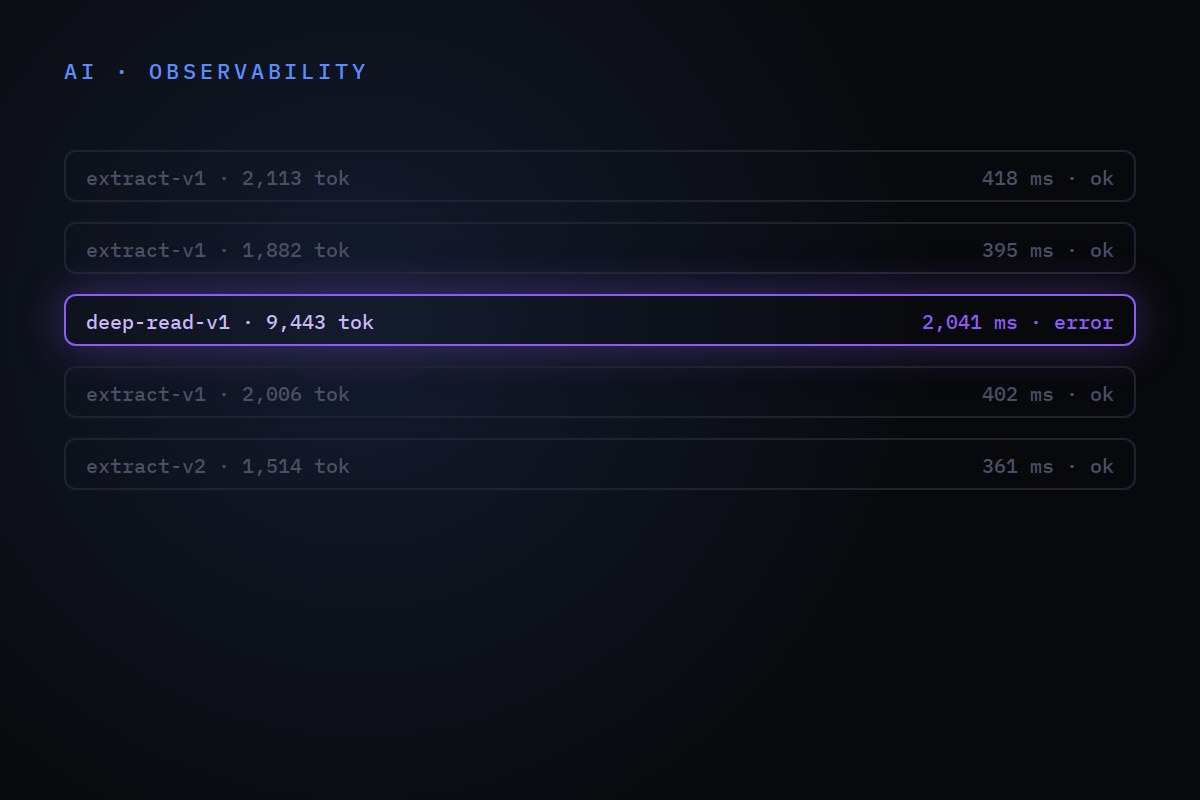
The Auditor. Every model call the system makes is written to a ledger: which prompt version ran, what it cost, how long it took, whether it failed. Never the document contents. When a client asks “what does your AI do with my data,” the answer is a screen, not a shrug. This is the part most agent blueprints skip, and it is the part a regulated profession actually requires.
The human gates
Agents do the work that scales: reading, filing, requesting, nudging, flagging. People keep the three decisions that matter: confirming a schema before it is trusted, judging whether a money finding is real, and closing the month. The design principle is the same one we apply to every agent system we build: separate the infinitely scalable work from the small set of judgment calls a professional should always own.
What it took to build honestly
The agent logic is the small part. The majority of the engineering went into what surrounds it: tenant isolation proven by adversarial tests on every deploy, an audit trail on every action, browser journey tests that click what a real bookkeeper clicks, and email that confirms instead of vanishing. A blueprint without that surrounding plane is a demo. With it, it is a product a CPA can put in front of clients.
This system runs today at SheetTamer, free for practices. And the pattern generalizes: the same agents-plus-gates architecture runs our paid search, our customer service desk, and our clinical AI governance work.
Want this pattern in your business?
We build agent systems that actually run.
Not 2030 predictions. Working agents with authority limits, audit trails, and human gates, shipped in weeks.